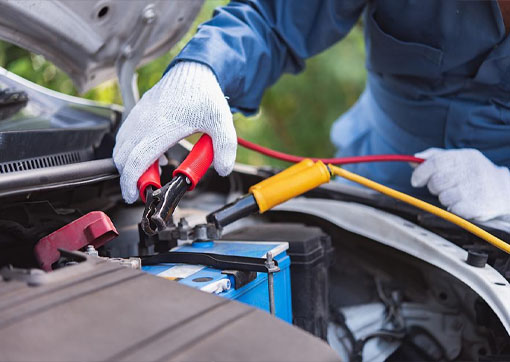
When Should a Car Battery Be Tested?
A battery test is worth considering when there are noticeable changes in how the vehicle starts or its electrical system operates.
Common signs include:
- The engine cranks slowly before starting
- The vehicle needs repeated jump starts
- Headlights appear dimmer than usual
- Dashboard lights flicker during starting
- Electrical accessories are behaving unusually
- The battery warning light comes on
- The vehicle has been sitting unused for an extended period
- The battery is several years old
- The vehicle struggles to start after short trips
These symptoms don’t always mean the battery itself has failed. Problems with the alternator, starter motor, connections, or charging system can produce similar signs. That’s why testing the battery and checking the related electrical system is mandatory before replacing parts.
Car Battery Diagnostic and Electrical Checks
A car battery diagnostic looks beyond whether the battery currently has enough voltage to start the vehicle. The battery can be assessed alongside related electrical components when required. If a battery continues to go flat after charging or replacing, the cause may be in the vehicle’s electrical or charging system.
Depending on the symptoms, checks may involve:
- Battery condition and performance
- Starting system operation
- Charging system performance
- Alternator operation
- Battery terminals and connections
- Electrical faults affecting battery discharge
This approach helps separate a worn-out battery from other problems that could be causing repeated starting issues.
Battery Replacement for Most Vehicle Types
When replacement becomes necessary, we supply batteries suitable for a wide range of vehicles, including:
- Passenger vehicles
- SUVs
- 4WDs
- Utes
- Vans
- Light commercial vehicles
Our technicians will install the correct battery for your vehicle and confirm the charging system is operating correctly before completing the job.